

BNDT and Ridge are both popular minimalist wallets, but they take fundamentally different approaches to slim carry. Ridge has been around since 2013 and built a massive brand through aggressive marketing. BNDT launched as a direct-to-consumer alternative with MagSafe integration, full-grain leather, and a significantly lower price point. This comparison covers every metric that actually matters: price, materials, capacity, MagSafe, RFID, and warranty. No fluff, no bias — just specs and honest analysis.
The short answer: BNDT offers more features at a lower price. Ridge offers titanium and has the advantage of brand recognition and a decade-long track record. Your choice depends on whether you value MagSafe compatibility and price, or whether brand heritage and exotic material options matter more to you.
Price Comparison
This is the most significant difference between the two brands, and it is not even close.
| Wallet | Price | What You Get |
|---|---|---|
| BNDT Maverick | $59.77 | Full-grain leather, MagSafe, RFID blocking, lifetime warranty |
| BNDT Maverick 2.0 | $69.77 | Enhanced MagSafe array, full-grain leather, RFID blocking, lifetime warranty |
| BNDT Outlaw | $64.99 | Aluminum frame, quick-trigger, 12-card capacity, RFID blocking |
| Ridge Aluminum | $95 | Aluminum plates, elastic band, RFID blocking |
| Ridge Titanium | $140 | Titanium plates, elastic band, RFID blocking |
| Ridge Carbon Fiber | $125 | Carbon fiber plates, elastic band, RFID blocking |
At $59.77 versus $95+, BNDT saves you $35-80 depending on the Ridge model you are comparing against. That is a 37% savings at minimum. And the BNDT Maverick includes MagSafe, which Ridge does not offer at any price point. If you want MagSafe on a Ridge wallet, you need a third-party adapter that adds bulk and cost.
Both brands run occasional sales, but BNDT everyday price is lower than Ridge sale price in most cases.
Materials and Build Quality
Ridge wallets use two aluminum or titanium plates connected by an elastic band system. The plates are CNC-machined and come in various finishes including matte, brushed, and colorful PVD coatings. The build quality of the plates themselves is excellent — Ridge has had over a decade to refine their machining process.

However, the elastic band is the weak point. Ridge uses replaceable elastic bands to hold cards in place and provide a cash strap. These bands stretch out over time and need replacement every 6-12 months with regular use. Ridge includes replacement bands, but the fact that a core structural component wears out is a design limitation. Reddit is full of complaints about loose bands after a few months of daily carry.
BNDT takes a different approach. The Maverick and Maverick 2.0 use full-grain leather construction — not top-grain, not bonded, not genuine leather (which is actually the lowest quality despite the misleading name). Full-grain leather is the strongest and most durable leather grade. It develops a natural patina over time and gets better looking with age rather than wearing out.
The BNDT Outlaw uses an aluminum frame similar to Ridge but replaces the elastic band system with a quick-trigger mechanical deployment. Press the trigger and cards fan out for selection. No bands to stretch, no rubber to degrade. It is a mechanically superior solution to the elastic band approach.
To be fair to Ridge: their titanium option is genuinely impressive. Titanium is lighter and stronger than aluminum, and it has a premium feel that is hard to replicate. If material exoticism matters to you, Ridge titanium wallet is one of the best on the market. BNDT does not currently offer a titanium option.
Card Capacity
Both brands handle similar card counts, but the experience of using that capacity differs significantly.
Ridge: Officially holds 1-12 cards. In practice, once you exceed 6-7 cards, the elastic bands are under significant tension and cards become harder to slide out. At full 12-card capacity, the wallet is noticeably thicker and the bands are stretched tight. Accessing a card in the middle of the stack requires fanning through all of them.
BNDT Maverick / 2.0: Holds up to 7 cards (1.0) or 8 cards (2.0) in a slim profile optimized for daily essentials. It does not try to be a 12-card wallet and is better for it — every card is easy to access.
BNDT Outlaw: Holds up to 12 cards with the quick-trigger mechanism. Press the trigger and cards fan out in a staggered spread, making it easy to select the card you need without fumbling through a tight stack. This is a fundamentally better user experience than Ridge friction-slide approach at higher card counts.
If you carry up to 7 or 8 cards, both brands work fine. If you carry more, the Outlaw quick-trigger gives it a clear advantage over Ridge elastic band system.
MagSafe Compatibility
This is where BNDT wins outright, because Ridge simply does not compete in this category.

Ridge: No MagSafe compatibility. None. Zero. If you want to use a Ridge wallet with MagSafe, you need to buy a third-party magnetic adapter, stick it to the back of the wallet, and hope the alignment is close enough. It is a clunky workaround for a feature that should be built in. Ridge has not announced any MagSafe plans despite the feature being standard on iPhones since 2020.
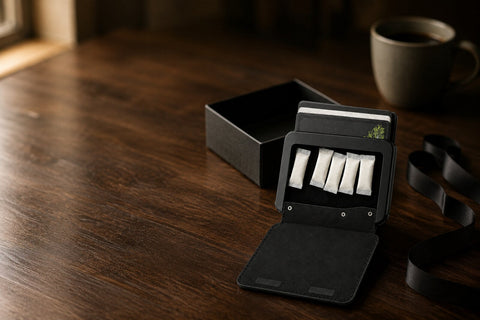
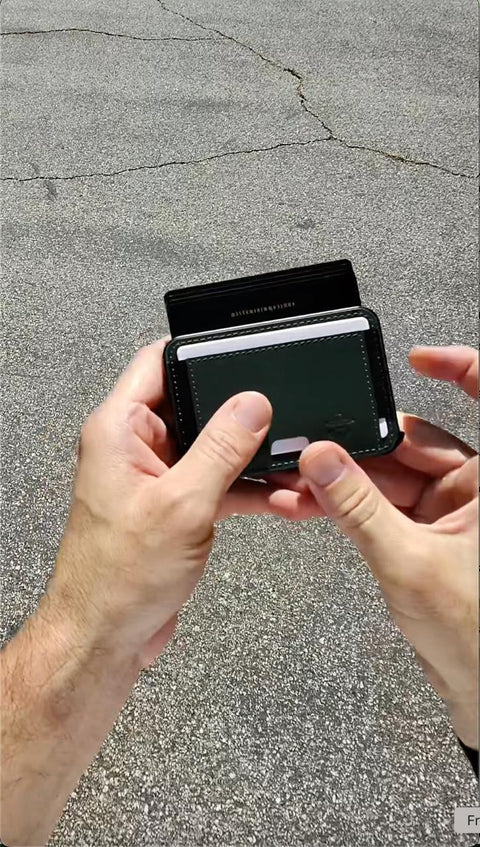
BNDT: The Maverick and Maverick 2.0 have MagSafe built into the wallet from the ground up. N52-grade neodymium magnets arranged in the Apple MagSafe ring pattern provide a strong, secure attachment to any iPhone 12 or later. The Maverick 2.0 features an enhanced magnetic array for even stronger hold. Both wallets work equally well as standalone cardholders when not attached to a phone.
If you carry an iPhone, this alone might be the deciding factor. MagSafe wallet carry is genuinely transformative — one fewer item to grab, one fewer pocket used, and seamless tap-to-pay access.
RFID Blocking
Both brands include RFID blocking, so this is essentially a tie.
Ridge: The aluminum and titanium plates naturally block RFID signals on the wide faces of the wallet. Cards are protected when the wallet is closed.
BNDT: The Outlaw uses its aluminum frame for natural RFID blocking. The Maverick series includes an embedded RFID-blocking layer within the leather construction.
RFID skimming is statistically rare in practice, but both brands protect against it. Neither has a meaningful advantage here.
Card Scratching
This is a common complaint on Reddit about metal wallets generally, and Ridge specifically. When you slide cards in and out of a metal wallet repeatedly, the card surfaces can develop scratches — especially the magnetic stripe and the raised numbers on older embossed cards.

Ridge addresses this with their elastic band tension, which holds cards against each other rather than the metal plates. But if you carry just 2-3 cards, they will contact the plates directly, and scratching is more likely.
BNDT Maverick series avoids this entirely because the card compartment is full-grain leather — soft, smooth, and incapable of scratching your cards. The Outlaw uses a mechanical deployment system where cards are held in a tray rather than friction-pressed against metal surfaces, which significantly reduces card-on-metal contact compared to the Ridge design.
If card condition matters to you — especially if you have a premium metal credit card — the BNDT Maverick leather interior is the safest choice.
Warranty and Support
Ridge: Offers a lifetime warranty against defects in materials and workmanship. Their customer service is generally well-reviewed, though response times can be slow during peak periods given their volume. Replacement elastic bands are included with purchase and available for free upon request.
BNDT: Also offers a lifetime warranty. As a smaller, direct-to-consumer brand, BNDT provides faster and more personal customer support. You are not ticket number 47,293 — you are talking to the team that designed the wallet. Support is US-based and typically responds within hours, not days.
Both warranties are comparable on paper. The practical difference is in the support experience, where smaller brands consistently outperform larger ones.
The Verdict
Here is the honest breakdown:
Choose BNDT if:
- You want MagSafe compatibility (Ridge does not offer it)
- Price matters — $59.77 vs $95+ is significant
- You prefer leather over bare metal for card protection
- You want a quick-trigger mechanism instead of elastic bands (Outlaw)
- You value responsive, personal customer support
- You do not want to replace worn-out elastic bands every 6-12 months
Choose Ridge if:
- You want titanium — Ridge titanium wallet is genuinely excellent and BNDT does not offer this material
- Brand heritage matters to you — Ridge has been around since 2013 and has a proven track record
- You want exotic finishes — Ridge offers dozens of colorways including collaborations and limited editions
- You prefer the elastic band system (some people genuinely do)
For most buyers, BNDT is the better value. You get MagSafe, full-grain leather, RFID blocking, and a lifetime warranty for $35 less than Ridge entry-level aluminum wallet. The Maverick is arguably Ridge most direct competitor, and it wins on features and price simultaneously.
That said, Ridge is not a bad wallet. It is a good wallet at a premium price, with the tax going toward brand recognition and material variety. If you specifically want titanium or a limited-edition colorway, Ridge is your only option between these two brands.
Our recommendation: start with the BNDT Maverick at $59.77. If you are not convinced within the first month, the lifetime warranty has you covered. But based on the 100+ five-star reviews, we think you will be keeping it.
Last updated: March 2026

in
just purchased